Those clever scientific people at Oxford University have spilled the beans and admitted all: they have been running tests on the coins and notes of the realm and the results do not look good. Yes indeed, the great British Coin has a dirty secret, and with up to 26, 000 bacteria on a single note, paper money is even worse.
Bearing in mind some of the places people hide their money, and the way it is passed about from hand to hand, it isn't really surprising that the filthy lucre lives up to its name. But this is not the first time that the pound has been put to the test and found to be a currency that is lacking in currency cleanliness. Earlier tests found bank notes that were harbouring a dodgy bacteria, called Klebsiella, that can cause reparatory infections and mess up your waterworks, which is not good at all because, with the National Health Service being the way it is, nobody want to spend ten or more hours sitting cross legged in accident and emergencies, gasping for breath and praying to God they remembered to lock the lid on their cash box.
Enterobacter is another money-loving bacteria that can cause a list of diseases as long as your arm, some of which may require rectal screening—and nobody wants that!
If you are shocked at the secret life that the British Pound has teeming all over it, you may be relieved to hear that it is not, by any means, the worst offender. The Swiss Franc harbours close to double the amount of bacteria of the British Pound, but the Danish Krone tops the list with a massive 40, 266 bacteria.
According to the old saying 'A fool and his money are soon parted', but with statistics like these, maybe the fool had the right idea all along. So next time you put your hand in your purse, or open your wallet, just remember a few more old sayings: 'Health is better than wealth' and 'Money is the root of all evil'; so 'Neither a lender, nor a borrower be' because 'Where there's muck there's brass' and 'You can't take it with you when you die'.
Saturday, 6 April 2013
Friday, 5 April 2013
Product Review: Helix Shredding Scissors

Helix's shredding scissors offer a cheap and simple
alternative to electric shredders. One of the main advantages of buying
shredding scissors is that they are a lot smaller than an electric shredder;
they take up no room on a desk or worktop and can easily fit into a drawer—try
doing that with an electric shredder. It is also easier to remove trapped paper
from between the blades of a pair of shredding scissors than it is from the
shredding mechanism of an electric shredder; and, in my experience, electric
shredders are more prone to this problem than shredding scissors.
There are, however, some disadvantages to using
shredding scissors. A pair of scissors is powered by the fingers and thumb of
the user and, due to the fact that they have multiple blades (5 in this case)
it takes a lot more effort to work the scissors; making it difficult to shred more
than one sheet at a time.
Even light office duties would probably be too
much work for Helix's shredding scissors, but, for occasional use in the home, they are
probably a much better option than an electric shredder; unless complete sheets
of paper need shredding on a regular basis. In most cases though, it is unnecessary
to shred a full sheet because it is only the sensitive information such as
names, addresses, and bank account details etc. that need to be removed; and
this is where these scissors really come into to their own. Just a few snips to
the area containing the personal details, followed by a few more snips across
the resulting cuts; reduces it all to tiny squares of paper that are so small
that they make confetti seem like big-stuff.
So, for large sheets or quantities of paper, an
electric shredder remains the better option; but, for light or occasional use
in the home, a pair of Helix Shredding Scissors are a cut above the competition.


Wednesday, 27 March 2013
How To Stop Toothache The Natural Way
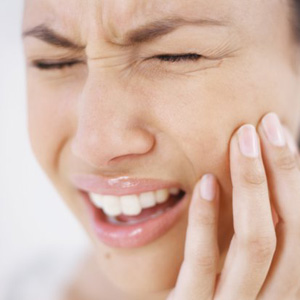
Toothache is a painful and distracting problem. Most people suffer from it at some point in their lives and once the pain starts, sooner or later, a visit to the dentist will become necessary. Modern day life can be hectic though, and busy work schedules, family commitments, or any number of other things can result in people having to live with toothache until they have time to visit the dentist. Modern over the counter medicine offers many options for suppressing pain, but some people do not wish to tackle the problem by popping pain killing tablets, so they seek a simple home remedy instead.
- Oil of Cloves is one of the best known home remedies for toothache and it is easy to target the problem area with a piece of cotton wool or tissue that has been dipped in clove oil. Even chewing on a clove that has been taken from the spice rack in the kitchen can provide effective relief for aching teeth; though it may take several minutes before this simple home remedy has time to take effect.
- Salt can also be used to treat aching teeth. Dissolve a couple of teaspoons of salt into a glass of warm water. Give the mixture a good stir and use it to swill around the aching tooth. After a minute or two spit out the mixture, take another sip of the salty water and rinse and repeat until the glass is empty.
- Another alternative is to use some ice. Even a bag of frozen peas, when held against against the cheek, may offer some relief, but a better idea is to use an ice pack. In the event that an icepack is not available; a sandwich bag filled with ice can work just as well, or—if you are feeling brave—pop an ice cube into your mouth and hold it on top of the offending tooth.
- Swilling the mouth with brandy, whiskey, or vodka can also alleviate the pain of an aching tooth. Another option is to soak a Q-tip or piece of cotton wool in one of the aforementioned spirits and use it to dab away the pain.
- The medicinal properties of garlic can also be called on to repel the pain caused by an aching tooth. Simply crush a clove or two with a pestle and mortar—the back of a spoon works just as well—and add a little salt to the mix. Apply the resulting paste to the offending tooth and allow the garlic ten minutes to half an hour to work its magic. Reapply the paste three or four times a day.
- Unlikely as it may sound, raw potato can also take away the pain from an aching tooth. Cut the potato into small to medium sized cubes, chill them in the refrigerator, and then press them against the problem tooth.
Remember, these remedies are, at best, a means of attaining temporary relief. Pain is just the symptom though; the problem needs to be tackled at its source, by a trained dental practitioner.
Monday, 25 March 2013
Maneki Neko, The Ornament That Brings Good Luck

The cat’s name is Maneki Neko; it means 'beckoning cat' in Japanese and this beckoning action has important relevance in the mythical origins of Maneki Neko. There are several different versions of the story, but two common factors are incorporated into all of the tales—the raised paw and the belief that Maneki Neko is lucky.
One tale states that Maneki Neko belonged to a priest who lived in poverty in a rundown temple, in Tokyo. He was a very good man, who had very little to eat, but whatever meagre provisions he could scrape together he was happy to share with his cat. One day a wealthy nobleman was caught in a sudden storm and was forced to take shelter under a large tree that stood in the temple grounds. The nobleman glanced through the driving rain towards the temple and saw cat in the doorway, beckoning him inside. Fascinated by such an incredible sight, he felt impelled to take a closer look at the strange cat, so he dashed out from under the tree and ran for the temple. Seconds later the tree was struck by lightning and, knowing full well that he would have been killed if not for the cat’s intervention, the nobleman was so filled with gratitude that befriended the priest and neither he nor his cat ever went hungry again. If this story is to be believed, the present day cat ornaments pay homage to this unusual temple cat.
In another version of the story, also set in Tokyo, the cat belonged to a courtesan named Usuguno. She loved her cat very much, but one night had cause for concern when the cat repeatedly pulled at the hem of her kimono and prevented her from entering the toilet. Usuguno tried to shoo her cat away several times, but it was so persistent in its actions that she became frightened. The owner of the brothel was witness to this strange scenario and, believing the cat to be bewitched, he drew his sword and cut off its head. The severed head flew up towards the ceiling of the toilet, where a large snake was poised, ready to strike Usuguno. In a final act of loyalty to its mistress, the decapitated head sank its teeth into the serpent and killed it. Usuguno was divested by the loss of her pet, so one of her customers carved a wooden likeness of it and presented it to her as a gift. One of the cat's paws was raised in greeting, and if this story is to be believed, this wooden cat was the first Maneki Neko.
Maneki Neko's colour also has significance. A black Maneki Neko is supposed to protects its owner from evil; gold attracts wealth, red is for good health and there are many other colours and combinations of colours, all of which have a different meaning. But what of the paw? Some cats hold up the right paw; others the left. A beckoning right paw is generally believed to bring wealth. The left paw is raised to attract customers to a business establishment.
Left paw or right paw, black, gold or red; it’s all a matter of personal preference, and whichever legend you choose to believe, a Maneki Neko of any type is trying to attract only good things; and what more could anyone ask of a little ornamental cat?
Saturday, 29 September 2012
Lady Gaga is Only One of Many Celebs With an Eating Disorder
   |
Lady Gaga has admitted that she has been battling bulimia and anorexia since she was fifteen-years-old, but the shapely singer is only one of many celebrities that have admitted to having an eating disorder. Gaga appears to have things under control, but many celebrities are not so lucky: Ten Famous People Who Have Struggled with Eating Disorders.
Wednesday, 26 September 2012
The Trudeau Aroma Aerating Pourer is a Breeze to Use
 |
Thursday, 6 September 2012
Celeb's Say 'No' to Obama Reelection
According to Chuck Norris if Obama is elected for a second term it could lead to '1,000 years of darkness' and Hank Williams Jr. thinks of Obama as a Hitler-like figure, while Clint Eastwood gets up on stage and talks politics to an invisible Obama. It seems to be harsh words all around for the President: A Trio of Celebrities Slam Obama, But is He Really The Antichrist, or Just an Invisible Man Wannabee?
Subscribe to:
Posts (Atom)